For many young athletes, improving performance starts with training harder, practicing longer, and pushing through fatigue. But there’s one piece of the puzzle that often gets overlooked: nutrition. A well-balanced athlete diet can make a major difference in energy levels, recovery, strength, focus, endurance, and overall athletic performance.
As a Registered Dietitian and Sports Nutrition Coach, I’ve spent years helping athletes improve their health and performance through better nutrition. But long before I coached others, I had to learn important lessons while changing my own diet and habits. What I discovered is that lasting nutrition changes don’t happen because of perfection — they happen because of consistency, support, and having a plan that works for YOU.
If you’re a young athlete trying to improve your daily diet, these five lessons can help you build healthier habits that support your athletic goals now and long into the future.
Advice From a Registered Dietitian: 5 Lessons I Learned From Changing MY Diet That Can Help Young Athletes Change THEIRS
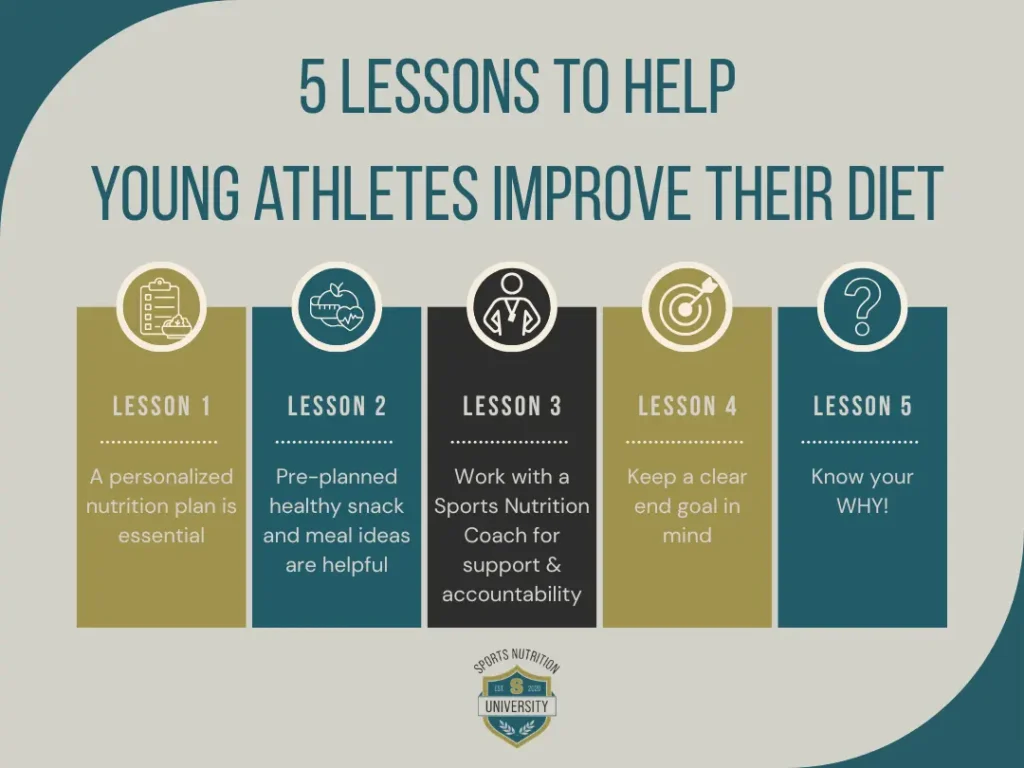
1. A Personalized Nutrition Plan Is Essential for Success
One of the biggest mistakes athletes make is trying to follow someone else’s diet plan. What works for one athlete may not work for another because every athlete has different needs, schedules, goals, sports, body types, and training demands.
When I changed my own diet, I realized I was far more successful when my nutrition plan actually fit my lifestyle, preferences, and goals. Instead of trying to force myself into a rigid meal plan that felt impossible to maintain, I focused on realistic changes that supported my health and performance.
This is especially important for young athletes. A personalized athlete diet should take into account factors such as:
- Training intensity and frequency
- Sport-specific energy needs
- Food preferences
- School and practice schedules
- Recovery needs
- Performance goals
- Medical history and nutritional deficiencies
For example, a swimmer training twice a day will have very different nutritional needs than a baseball player or gymnast. Some athletes need help increasing calories for energy and recovery. In contrast, others may need support improving hydration, balancing meals, or learning how to fuel before competition.
The more personalized a nutrition plan feels, the more sustainable it becomes. Young athletes are much more likely to stick with healthy habits when they feel realistic and achievable rather than restrictive.
Working with a Sports Nutrition Coach and Registered Dietitian can help athletes create a daily diet that works specifically for their body and sport.

2. Pre-Planned Healthy Snacks and Meal Ideas Are Helpful
Making healthy choices becomes much easier when you already know what to eat. One thing that helped me tremendously during my own nutrition journey was having simple lists of healthy snacks, balanced meals, and quick food ideas readily available.
Related article: Meal Planning Basics for Young Athletes: Fueling Performance with a Smart, Flexible Approach
Young athletes often struggle with nutrition because they are busy. Between school, practices, games, homework, travel, and social activities, many athletes end up grabbing whatever food is convenient — even if it doesn’t properly fuel performance.
Having a go-to list of athlete-friendly meals and snacks can help athletes stay prepared and make better choices consistently.
Some examples of balanced athlete diet snacks include:
- Greek yogurt with fruit
- Peanut butter and banana on toast
- Trail mix with nuts and dried fruit
- Protein smoothies
- Cheese and whole grain crackers
- Turkey sandwiches
- Apples with peanut butter
- Hard-boiled eggs and fruit
Healthy meal ideas for athletes may include:
- Grilled chicken, rice, and vegetables
- Salmon with sweet potatoes
- Burrito bowls with lean protein and beans
- Whole grain pasta with meat sauce
- Omelets with toast and fruit
These types of foods provide the carbohydrates, protein, healthy fats, vitamins, and minerals athletes need to support energy, muscle recovery, and performance.
Creating structure around meals and snacks can also reduce stress and decision fatigue. Instead of wondering what to eat, athletes already have reliable options available that support their goals.
Related article: Fueling Young Athletes for Success: The Power of Planned Nutrition
3. Don’t Try to Do It Alone: A Sports Nutrition Coach Is Invaluable
One of the most important lessons I learned is that change is much easier with support and accountability. Even as someone educated in nutrition, I still benefited from guidance, encouragement, and coaching.
Young athletes often try to change their diet on their own by searching online for random advice or following social media trends. Unfortunately, this can lead to confusion, misinformation, unrealistic expectations, or unhealthy habits.
A coach provides more than just information. A good Sports Nutrition Coach helps athletes:
- Build healthy routines
- Stay accountable
- Adjust plans when challenges arise
- Learn how to fuel properly
- Develop confidence around food
- Separate nutrition facts from myths
- Stay motivated during setbacks
Nutrition is not just about knowing what foods are healthy. It’s about learning how to consistently apply healthy habits in real life.
For young athletes especially, support can make all the difference. Developing healthy eating patterns early can positively impact athletic performance, long-term health, confidence, recovery, and even mental focus.
At Sports Nutrition University, athletes receive guidance tailored to their unique needs, goals, and sport. Instead of trying to figure everything out alone, athletes can work directly with a Registered Dietitian and Sports Nutrition Coach who understands how to optimize nutrition for performance.
4. A Clear End Goal Is Very Important
When I changed my own diet, I found it much easier to stay consistent when I had a clear goal in mind. Without a purpose, healthy habits can quickly feel frustrating or unnecessary.
Young athletes need to understand what they are working toward. A strong athlete diet should connect directly to specific performance and health goals.
Some examples of athlete nutrition and performance goals include:
- Improving endurance
- Building strength and muscle
- Recovering faster after practices
- Increasing energy levels
- Preventing injuries
- Improving speed and focus
- Supporting healthy growth and development
- Feeling more confident during competition
Clear goals help athletes stay focused even when progress feels slow. They also help athletes understand that nutrition is not punishment — it’s fuel.
One important thing to remember is that goals should be realistic and performance-focused rather than solely appearance-focused. Young athletes should prioritize strength, energy, recovery, and health over unrealistic body image expectations.
When athletes see how proper nutrition directly improves performance, motivation often increases naturally.
5. Knowing Your “Why” Can Keep You Motivated and On Track
The final lesson I learned may have been the most powerful: knowing WHY I wanted to change my diet helped me stay consistent when things became difficult.
Motivation comes and goes. There will always be busy days, stressful weeks, travel schedules, cravings, and setbacks. But when athletes have a strong reason behind their goals, they are much more likely to keep going.
For some athletes, their “why” may be:
- Wanting more energy during games
- Earning a starting position
- Playing at the college level
- Recovering faster from workouts
- Feeling healthier and stronger
- Becoming a better teammate
- Supporting long-term health
Understanding your “why” gives meaning to the small daily choices that build long-term success.
A healthy athlete diet is not about perfection. It’s about creating sustainable habits that support both athletic performance and overall well-being.

Why Nutrition Matters for Young Athletes
Young athletes place significant demands on their bodies. Without proper nutrition, athletes may experience:
- Low energy
- Poor recovery
- Increased injury risk
- Difficulty concentrating
- Fatigue
- Reduced endurance
- Slower muscle development
Proper sports nutrition helps athletes fuel practices, maximize recovery, improve consistency, and feel their best both on and off the field.
The habits athletes develop at a young age often carry into adulthood. Learning how to properly fuel the body now can create lifelong benefits for health, performance, and confidence.
Athletes: Work With a Sports Nutrition Coach and Registered Dietitian to Improve Your Diet AND Performance
As an athlete, changing your diet can feel overwhelming, but you do not have to do it alone. Working with a Sports Nutrition Coach and Registered Dietitian can help you build a personalized nutrition strategy that supports your goals, performance, and long-term health.
At Sports Nutrition University, athletes receive expert guidance designed specifically for their sport, lifestyle, and performance needs. Whether you are looking to improve energy, recovery, strength, endurance, or overall health, personalized coaching can help you build habits that truly last.
If you’re ready to take your diet and athletic performance to the next level, Sports Nutrition University is here to help. Contact me today to get started!