
When you’re a young athlete, your schedule is packed—school, practices, games, training sessions, and everything in between. It’s no surprise that meal planning doesn’t always go perfectly. But here’s the good news: it doesn’t have to.
As a Sports Nutrition Coach and Registered Dietitian at Sports Nutrition University, I teach athletes that consistency beats perfection every time. The key is having a flexible, realistic plan that supports performance—even when life gets hectic.
Let’s break down the basics of meal planning for young athletes and introduce a simple strategy that can make a big difference.
Why Meal Planning Matters for Young Athletes
Proper nutrition isn’t just about staying healthy—it’s about maximizing performance, recovery, and energy levels.
When you fuel your body correctly, you can:
- Improve endurance and strength
- Recover faster between practices and games
- Maintain focus in school and sports
- Reduce the risk of injury and burnout
Without a plan, it’s easy to skip meals, grab low-quality snacks, or underfuel—all of which can hurt performance.
Related article: Athletes Can’t Win on Empty: Why a Competition Fuel Plan Is Essential for Peak Performance
The 3-Tier Meal Planning Strategy for Young Athletes
Life is unpredictable. That’s why having just one “perfect” meal plan often fails. Instead, I recommend a 3-tier meal planning system so you always have a backup.
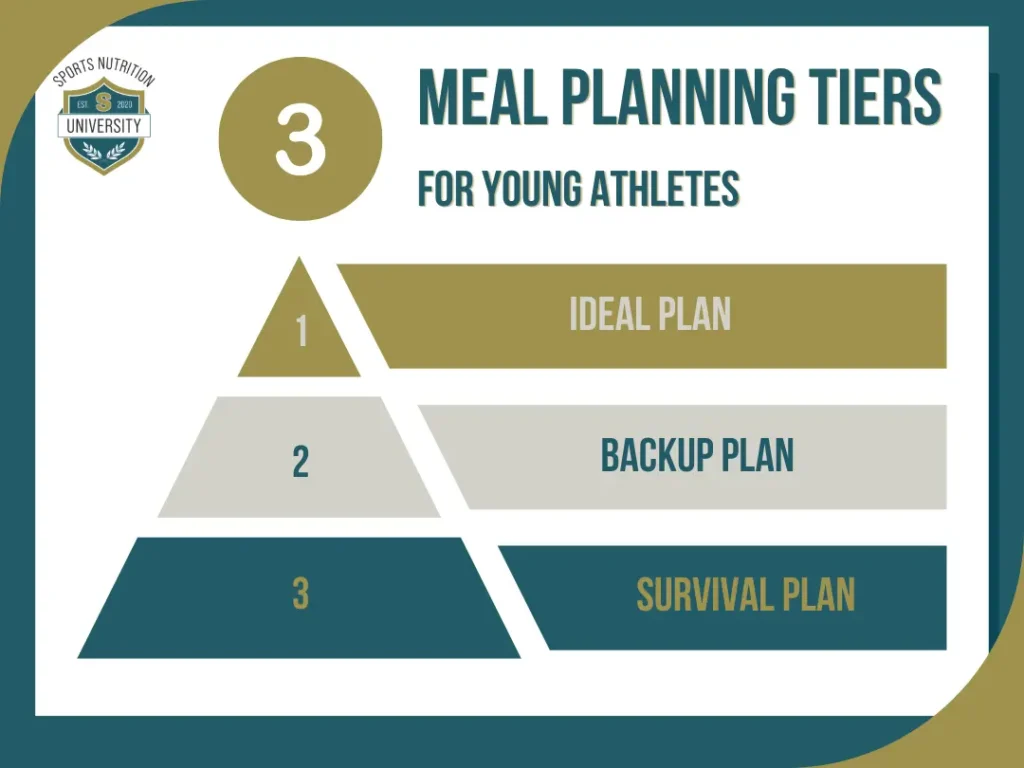
🥇 Tier 1: Ideal Plan (Best Case Scenario)
This is your gold standard—when you have the time and resources to prepare balanced, nutrient-dense meals.
Example:
- Homemade whole wheat pizza
- Lean protein (chicken, turkey, or tofu)
- Veggies like spinach, peppers, or mushrooms
- Healthy fats like olive oil or avocado
Goal: Aim for Tier 1 most of the time to fully support performance and recovery.
🥈 Tier 2: Backup Plan (Still Nutritious, More Convenient)
When things don’t go as planned, this option keeps you on track with less effort.
Example:
- Pre-made pizza crust
- Homemade or store-bought sauce
- Added protein (grilled chicken, cheese)
- A side salad or fruit
Goal: Maintain good nutrition even when time is limited.
🥉 Tier 3: Survival Plan (When Life Gets Chaotic)
Sometimes, everything falls apart—and that’s okay.
Example:
- Ordering pizza or takeout
- Pairing it with a side like fruit, yogurt, or a protein shake
Goal: Avoid skipping meals and still get the fuel your body needs.
Why the 3-Tier Meal Planning Approach Works
This tiered system helps young athletes:
- Stay consistent with their nutrition
- Reduce stress around “eating perfectly”
- Avoid underfueling during busy days
- Build sustainable habits for long-term success
Remember: One less-than-perfect meal won’t hurt your performance—but consistently underfueling will.
Related article: Athletes Who Under-Eat: A Widespread Problem with a Simple Fix
What Should Young Athletes Include in Every Meal?
No matter which tier you’re using, aim to include:
✅ Carbohydrates (Your Main Fuel Source)
- Whole grains, fruit, pasta, rice, potatoes
- Provides energy for training and competition
✅ Protein (For Recovery and Muscle Growth)
- Chicken, fish, eggs, dairy, beans, tofu
- Helps repair muscles after activity
Related article: Protein for Teen Athletes: A Guide to Optimal Nutrition
✅ Healthy Fats (For Long-Lasting Energy)
- Nuts, seeds, avocado, olive oil
✅ Hydration
- Water is essential for performance, focus, and recovery
Related article: Hydration for Athletes: Why Proper Hydration is Essential for Performance, Recovery, and Health
Sample Day of Tiered Meal Planning
Breakfast
- Tier 1: Oatmeal with fruit, nuts, and eggs
- Tier 2: Greek yogurt with granola and berries
- Tier 3: Protein bar + banana
Lunch
- Tier 1: Chicken, rice, and roasted vegetables
- Tier 2: Turkey sandwich + fruit + yogurt
- Tier 3: Grab-and-go wrap or school lunch + milk
Dinner
- Tier 1: Homemade balanced meal (protein + carbs + veggies)
- Tier 2: Quick stir-fry or pasta with protein
- Tier 3: Takeout with added protein or side salad
The Goal: Fueling for Performance, Not Perfection
Young athletes often feel pressure to eat “perfectly,” but that mindset can lead to frustration—or even burnout.
Instead, focus on:
- Consistency over perfection
- Fueling your body enough
- Making the best choice available in the moment
The 3-tier meal planning system ensures you always have a plan, no matter what your day looks like.
Get a Personalized Nutrition Plan From a Registered Dietitian and Sports Nutrition Coach
Every athlete is different. Your sport, training schedule, body, and goals all impact your nutrition needs.
Working with a Sports Nutrition Coach and Registered Dietitian can help you:
- Build a customized meal plan
- Improve performance and recovery
- Develop healthy, sustainable habits
- Gain confidence in your nutrition choices
The bottom line is that meal planning doesn’t have to be perfect to be effective. By using a simple 3-tier meal planning system, young athletes can stay fueled, energized, and ready to perform—no matter how busy life gets.
Aim for Tier 1, rely on Tier 2 when needed, and don’t stress when Tier 3 happens. Because at the end of the day, the goal is simple: fuel your body so you can perform at your best.
At Sports Nutrition University, I help young athletes create personalized nutrition strategies that fit their busy lives and support their performance goals. Schedule a 15-minute consultation call to find out how I can help YOU!